


How to choose a reliable paint protection film supplier worldwide
You should judge every paint protection film supplier on four criteria: technical performance, application fit, regulatory compliance, and cost. These standards do not change with geography. A supplier in one region deserves the same scrutiny as a supplier in another.
Global sourcing makes this harder. Suppliers differ by region, and the market is expanding fast. One projection puts global market value at US$64 million in 2026, rising to US$798.7 million by 2033 at a 43% CAGR. More options mean more careful vetting.
This post gives you specific factors to check, questions to ask, and red flags to avoid for each criterion. Use them before you commit to any paint protection film supplier.
Key Takeaways
Check technical documents and test data to confirm film quality.
Match the film to your local climate and installer skill level.
Verify regulatory certificates for your destination market.
Calculate total landed and lifecycle costs, not just unit price.
Use a checklist to evaluate every supplier on all four criteria.
Technical performance: What a paint protection film supplier must prove
Specifications tell you more than logos do. A reliable paint protection film supplier will answer technical questions with documents, not slogans. Start with the construction. Quality film uses aliphatic TPU, a color-stable base that resists yellowing far longer than aromatic alternatives. Ask for a Technical Data Sheet that confirms the base polymer.
Film thickness is not the only specification that matters — adhesive formulation, topcoat chemistry, and how the film handles UV exposure over time are equally important. But thickness is a good starting point because it forces a specific, factual answer that you can compare across options.
Film specs to verify
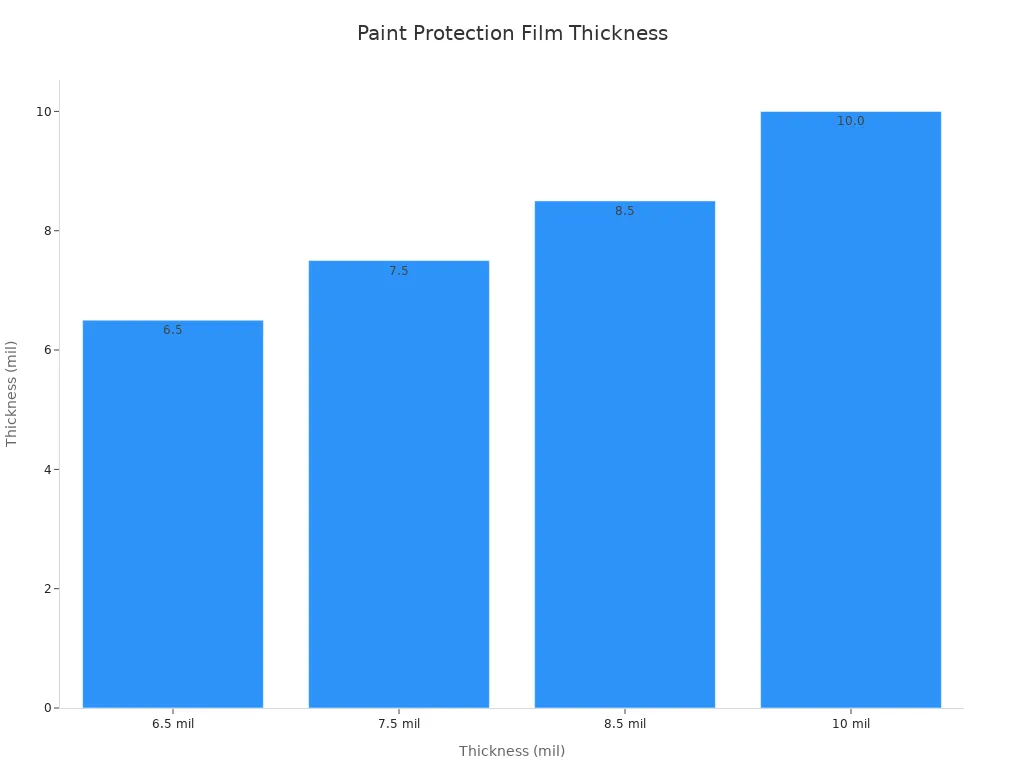
Thickness is your first comparison point. The overall range runs from 6.5 mil to 10 mil (about 165 to 250 microns). A 7.5 mil (roughly 190 microns) film is a common full-body standard, while 8 to 10 mil suits high-impact zones. Thickness refers to total composite thickness, not just the TPU layer. Aliphatic TPU at 150 to 200 microns is optimal for clarity and yellowing resistance.
SsFilm illustrates one option in this landscape. Its film uses aliphatic TPU across six series, from SQ and SK to SN, SX, SF, and SSR, with thicknesses from 7.5 mil to 10 mil. The film offers heat self-healing technology, a hydrophobic coating, UV blocking, and gloss or matte finishes. Treat these as benchmarks to compare, not as the only valid answer.
Self-healing deserves a careful read. This feature reduces the visibility of fine scratches, light swirl marks, and minor abrasions when the surface warms. It does not repair torn film, deep cuts, or punctures through the full thickness. Judge it as surface maintenance, not as proof the film cannot be damaged.
Test data and red flags
Request documentation for each quality attribute. The table below shows what to ask for.
Quality Attribute | Test Data or Certification to Request |
|---|---|
Yellowing resistance | Documentation confirming UV stability and resistance to discoloration over time |
Adhesion | Adhesive backing test results; a sample to check for strong, residue-free bonding |
UV resistance | Certifications or documentation validating UV resistance |
Scratch resistance | Sample testing results or documented scratch-resistance data |
Overall durability | Third-party testing results and quality certifications such as ASTM ratings |
Long-term performance | Warranty details, especially coverage for yellowing, cracking, and fading |
Manufacturers typically test stretch and flexibility, impact resistance, tear and puncture resistance, adhesive performance, surface recovery, stain resistance, weather and UV stability, and long-term appearance. Ask which of these your supplier documents.
Red flags are easy to spot. A supplier who quotes only a brand name, refuses a sample, or offers no written test data is asking you to trust marketing. Walk away from vague answers about the TPU type or the warranty terms.
Application fit: Matching film to climate and installers
A film that performs well in one region may underperform in another. Reliable suppliers are transparent about film types, finishes, and coverage options. That transparency lets you match the product to the vehicle and the local climate instead of guessing.
Climate and use-case suitability
Ask how a film handles the conditions your customers actually drive in. Hot, high-UV regions punish polymers with fading, yellowing, and adhesive failure. Cold winters bring road salt, ice-chunk impact, and freeze-thaw cycles that attack edges and seams. Coastal air accelerates oxidation of both film and adhesive. The table below maps these threats to film features.
Climate / Region | Key Threat | Film Features That Suit It |
|---|---|---|
Hot, high-UV | UV fading, yellowing, adhesive failure, etching | Deep-layer UV-inhibited film, protective topcoat, ceramic-infused options |
Cold winter and road salt | Embrittlement, salt attack on edges, freeze-thaw stress | TPU film with low-temperature flexibility, salt-resistant adhesive, sealed edges |
Coastal | Salt air corrosion, sand, chips that start rust | Chemical-resistant film, hydrophobic topcoat, strong chip protection |
Road salt, ice-chunk impact, and freeze-thaw cycles hit lower doors, rocker panels, and wheel arches hardest, so those areas demand strong stain resistance and durable adhesion. Use these markers to frame your questions.
SsFilm offers one reference point for these conversations. Its temperature resistance, chemical resistance, and aging resistance are capabilities worth asking about, alongside easy installation and OEM manufacturing or direct factory partnerships as support models.
Installation support and training
Installation skill determines film durability, so training support separates serious suppliers from resellers. Dealer programs commonly include structured instruction. Polar Tint's initial training, for example, comprises 65 hours — 40 classroom plus 25 on-the-job — with no prior experience required. Other programs pair a free online novice class with hands-on practice on hoods, fenders, and front bumpers, covering surface prep, film handling, positioning, smoothing, precision trimming, and troubleshooting.
Ask each supplier three questions: What installer training do you provide? Does warranty coverage depend on certified installation? What regional climate experience can you document? Factory partnerships add installation guides, technical data sheets, and application recommendations, plus stable batch quality and OEM/ODM options for private label programs.
Regulatory compliance: Certifications and standards
Compliance paperwork proves a supplier can ship to your market without customs problems. Ask for certificates and test reports that apply where you sell. A reliable paint protection film supplier will document compliance for the destination market, not just its home market.
Certifications to request
Start with material-specific reports. SGS chemical testing for RoHS and REACH confirms the film's composition and the absence of toxic plasticizers. It also separates pure TPU from PVC or TPH blends. Customs in the EU and US may block shipments that lack these declarations.
Certification / Test Report | What It Verifies |
|---|---|
SGS chemical testing (RoHS / REACH) | Chemical composition; absence of toxic plasticizers; pure TPU vs. PVC/TPH |
ASTM D412 | Tensile strength and elongation (conformability and tear resistance) |
ASTM G154 | Accelerated UV weathering (yellowing resistance, color shift, no delamination) |
ISO 9001 | Quality management system and batch-to-batch consistency |
Treat ISO 9001 with care. It certifies the manufacturing process, not the film's chemical makeup. Pair it with ASTM and SGS reports from independent labs such as Intertek or TÜV. Factory-issued QC sheets lack objectivity.
Regional checks and red flags
Match the paperwork to your destination. The EU centers on REACH Regulation (EC) No. 1907/2006, including Article 33(1) disclosure of Substances of Very High Concern above the 0.1% threshold. China enforces GB 18581-2020 limits on volatile organic compounds. Japan applies its Chemical Substances Control Law, India follows BIS guidelines for automotive coatings, and Australia requires NICNAS registration. Confirm the supplier can produce a certificate of origin, customs declaration, and foreign lab report.
Verify reputation through independent reviews and brand comparisons. Watch for suppliers who claim imported TPU but cannot show original certification, present outdated reports, or price far below market average. A missing warranty document or a refusal to provide samples signals deeper problems.
Cost: Comparing paint protection film supplier pricing
Price is the easiest number to compare and the least reliable one. Warranty length tells you more about supplier confidence. A warranty of up to 12 years is a useful benchmark, and the best brands back their film with a comprehensive 10- or 12-year policy that explicitly covers yellowing, bubbling, cracking, and staining. SsFilm's 5- to 15-year range shows how tiered coverage works across a product line. Ask for side-by-side comparisons of durability, clarity, ease of installation, and warranty terms. Confirm in writing what the warranty covers, and separate the manufacturer's material warranty from the installer's workmanship warranty.
Pricing transparency and hidden costs
A quoted unit price rarely reflects your real import cost. A $110 roll of ceramic film does not cost you $110. Land it in Miami and it costs $167. The gap between the FOB quote and the money that leaves your account is your real import cost. FOB stops at the ship's rail. Everything past that rail is yours: ocean freight, insurance, duty, port handling, broker fees, and the truck to your door. Most first-time importers budget for only two of those six.
Supply reliability is another hidden cost. Out-of-stock film means jobs cannot be booked, and waiting customers may go elsewhere. Restock speed, in-country warehousing, and regional coverage all affect lead times.
Cost group
Typical question
Effect on comparison
Film and packaging
What exactly is included in the unit price?
Defines the starting purchase cost
Freight and insurance
Which transport route and Incoterm apply?
Changes delivered cost and risk
Import charges
Who pays duties, taxes, brokerage, and port fees?
Prevents hidden landed charges
Inspection and defects
What happens to rejected or damaged rolls?
Adjusts cost for usable inventory
Cash and payment
What deposit, balance, bank, and financing costs apply?
Shows working-capital exposure
Support and claims
Who pays when a confirmed problem occurs?
Measures commercial risk beyond price
Total cost of ownership
Compare suppliers on lifecycle cost, not invoice price. Lifecycle cost equals material plus labor and prep plus maintenance plus replacement costs, minus retained resale value. Material cost tracks polymer quality and adhesive technology. Labor tracks installer expertise and facility overhead. Vehicle complexity tracks surface area and sharp body lines. A cheap 6.5 mil or 7.5 mil film saves money upfront, yet frequent replacements destroy that saving. An 8.5 mil film balances durability and labor cost. A 10 mil film suits track and off-road use, though its rigidity raises labor fees and edge-lifting risk.
The global PPF market is projected to grow from $64 million in 2026 to $798.7 million by 2033 at a 43% CAGR. A growing supplier landscape makes total cost of ownership the fair basis for comparison. Each pricing model fits a different buyer: low-cost film suits high-volume, short-cycle work; mid-tier film suits general retail; premium film suits high-value vehicles. Evaluate every paint protection film supplier on the same lifecycle math before you order.
Verify technical performance through documented specs and test data. Confirm application fit by matching film to your climate and installer skill. Check regulatory compliance with complete certificates for your destination market. Calculate cost as total landed and lifecycle expense, not unit price.
Use this checklist during every supplier evaluation:
Checklist Item | Status |
|---|---|
Technical specs confirmed | |
Climate fit validated | |
Certifications verified | |
Total cost calculated |
Reliability shows up across all four criteria at once. A low price cannot offset missing test reports or unverified compliance. Copy this checklist, apply it to each candidate, and only then place your order.
FAQ
How do I verify a supplier's test reports are genuine?
Ask for the original lab report, not a photocopy. Check the lab name, sample date, and test standard. Independent labs such as SGS, Intertek, or TÜV carry more weight than factory-issued sheets. Call the lab to confirm the report number when the order value justifies it.
Can I request film samples before placing an order?
Yes, and you should. A serious supplier will send swatches so you can test adhesion, clarity, and stretch by hand. Refusal to provide a sample is a red flag. Compare samples side by side under the same light before you commit.
What should a warranty claim process look like?
Ask who pays for replacement film, who covers labor, and how you file a claim. Confirm the policy covers yellowing, cracking, and peeling in writing. Separate the material warranty from the installer's workmanship warranty. A clear claims path signals supplier confidence.
What minimum order quantity and lead time should I expect?
Policies vary by supplier and region, so ask directly. Confirm the minimum order quantity, production lead time, and shipping method in writing. In-country warehousing shortens restock time. Out-of-stock film stalls booked jobs, so weigh lead time against unit price.
Do I need certified installers to keep the warranty valid?
Many suppliers tie coverage to certified installation. Ask whether training is included, how long it takes, and whether the warranty voids without certification. Factory partnerships often supply installation guides and technical data sheets alongside training support.
Explore Business Opportunities with SsFilm
Recommended Products
SSR Paint Protection Film
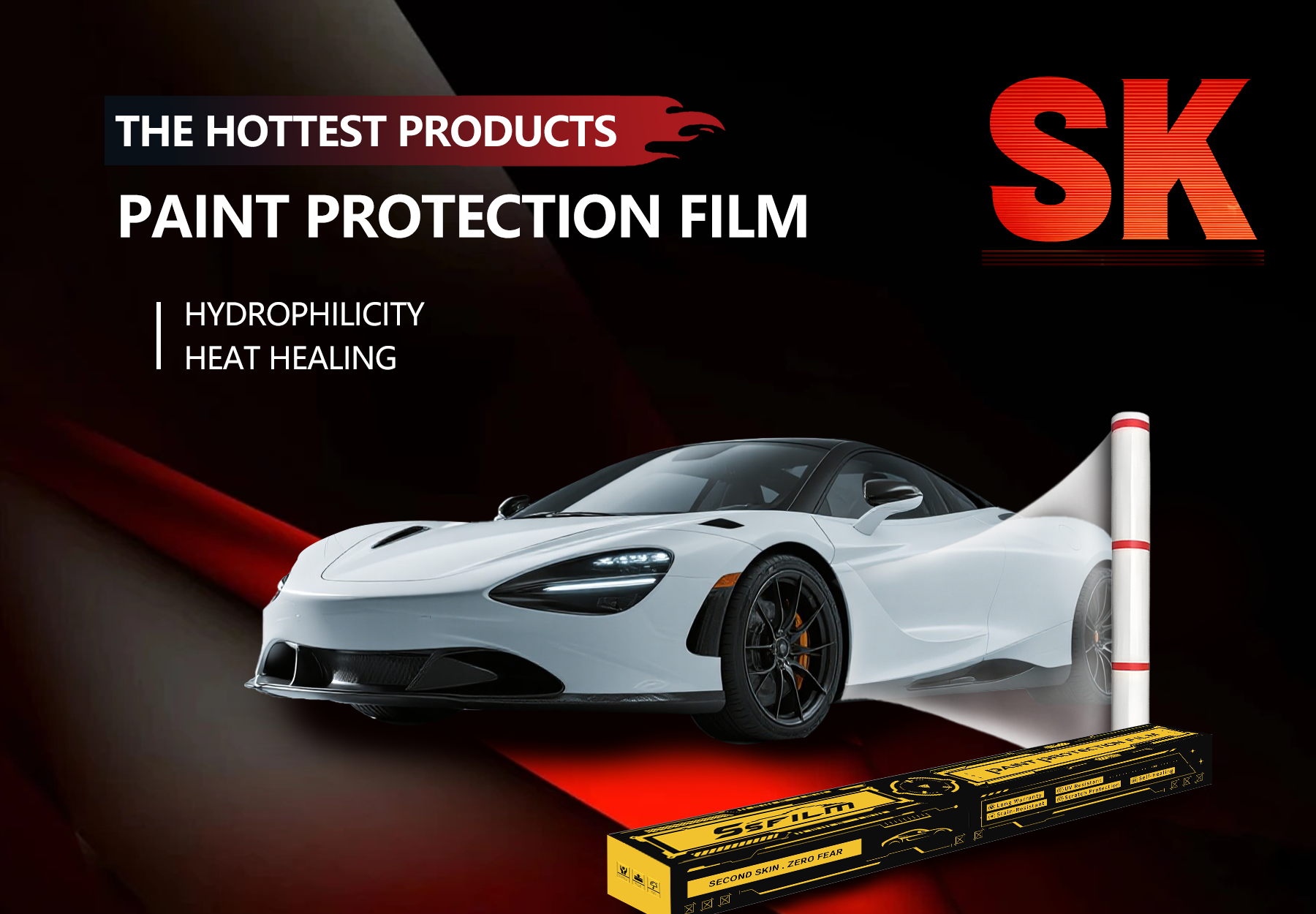
SK Series Heat-healing Hydrophilicity Car Paint Protection Film, 6-year Warranty Clear Gloss TPU PPF
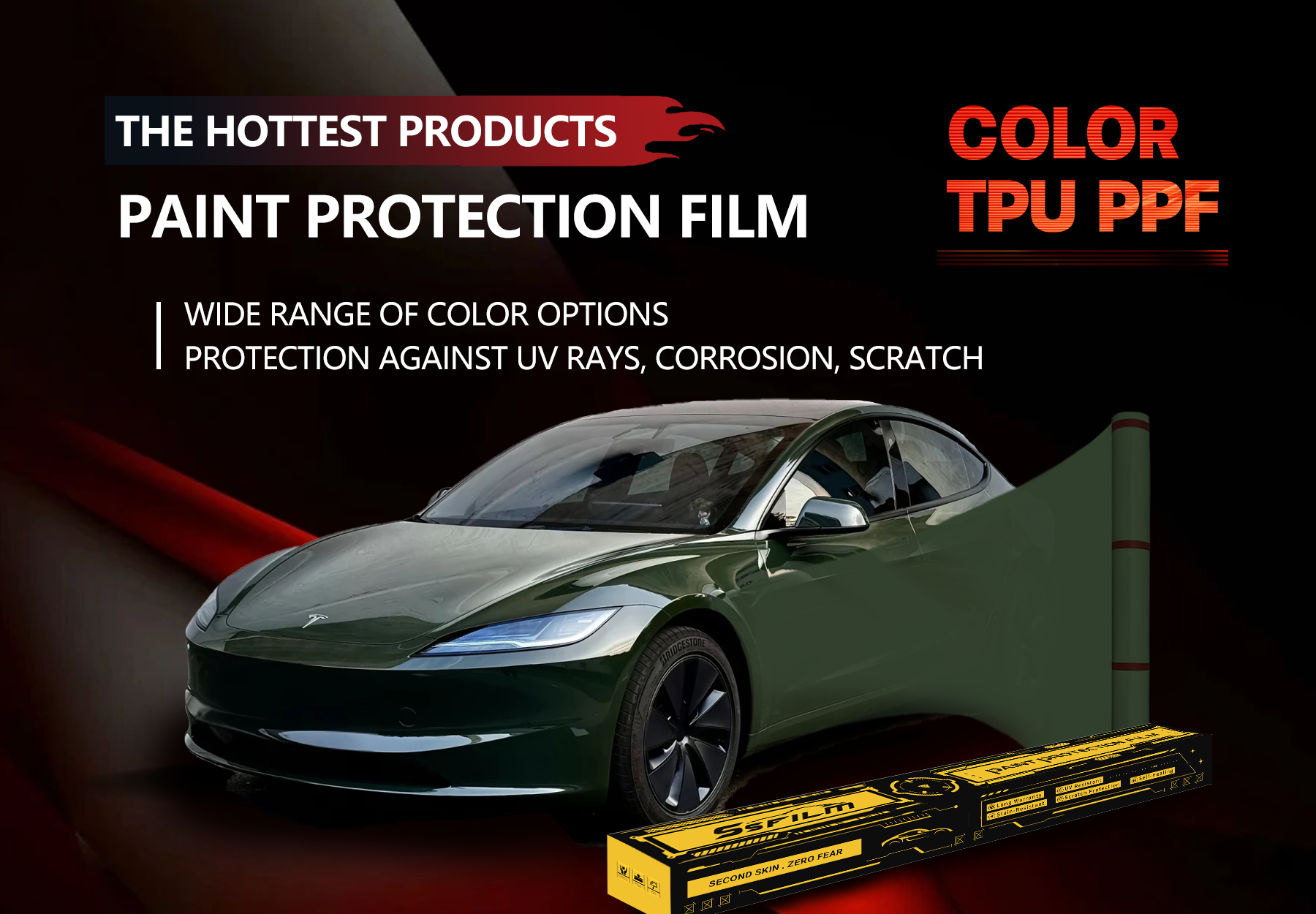
Heat Self-healing tinted TPU paint protection film
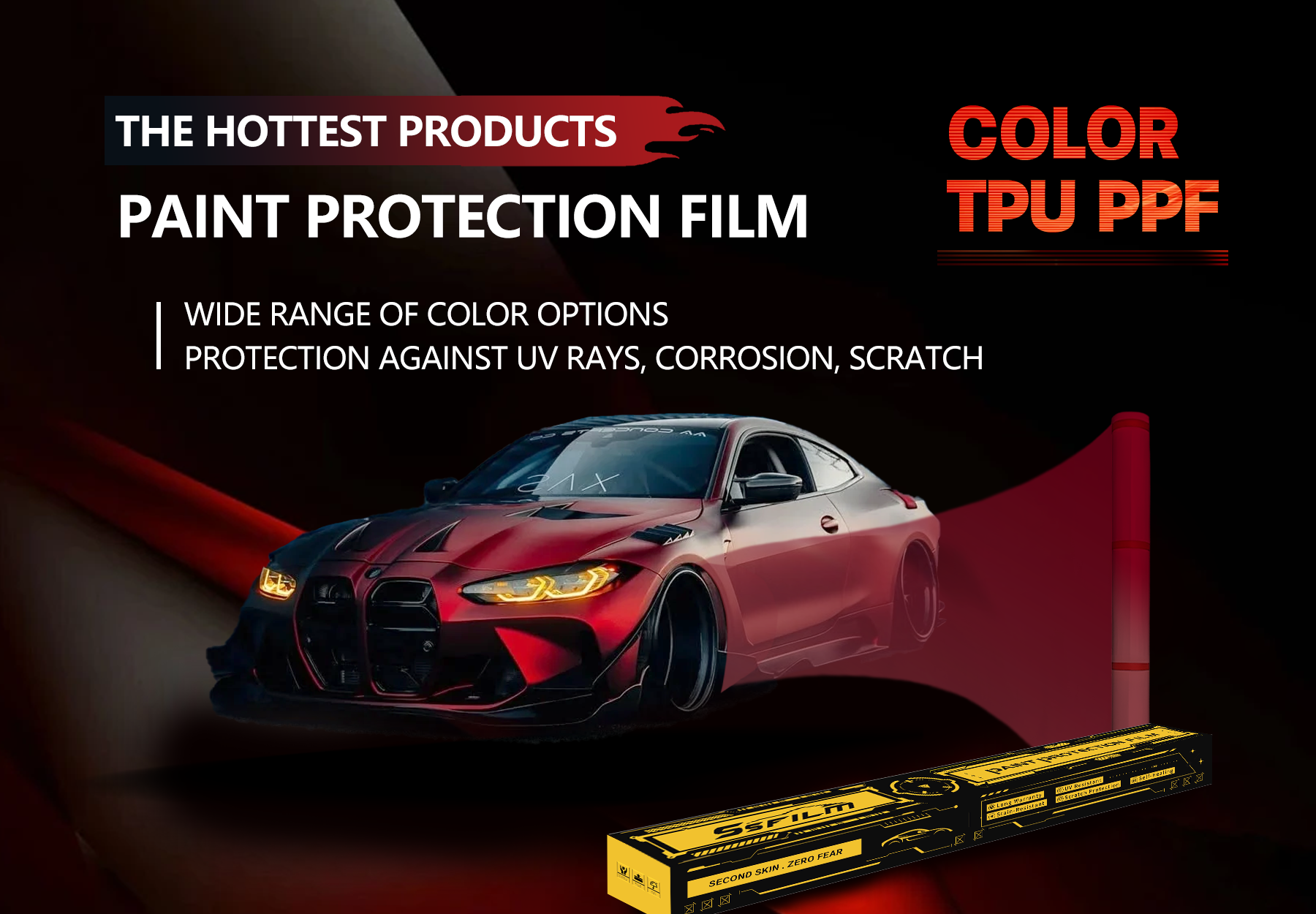
Heat Self-healing 8mil red TPU color paint protection film
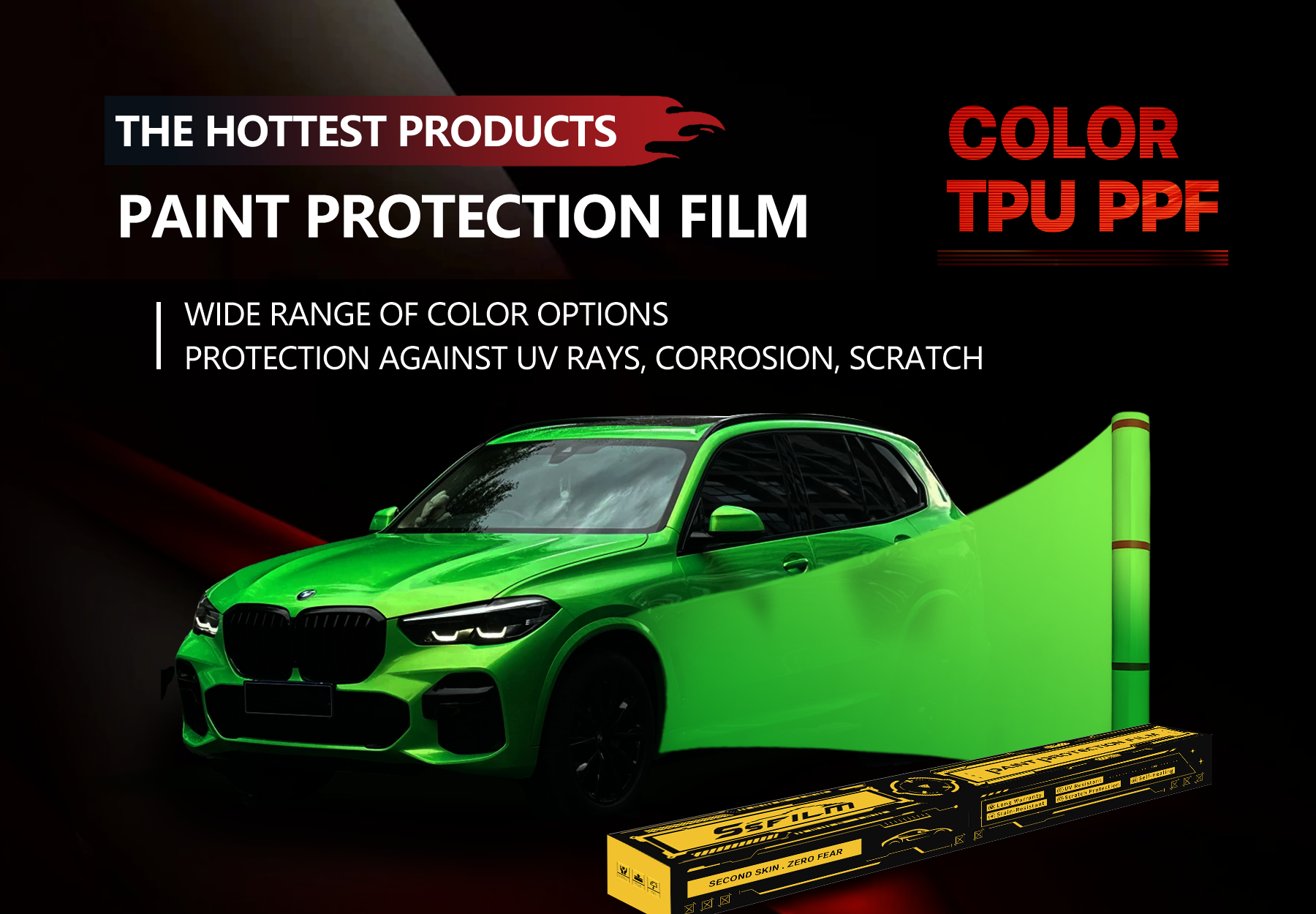
Excellent flexibility 7.5mil green TPU color paint protection film
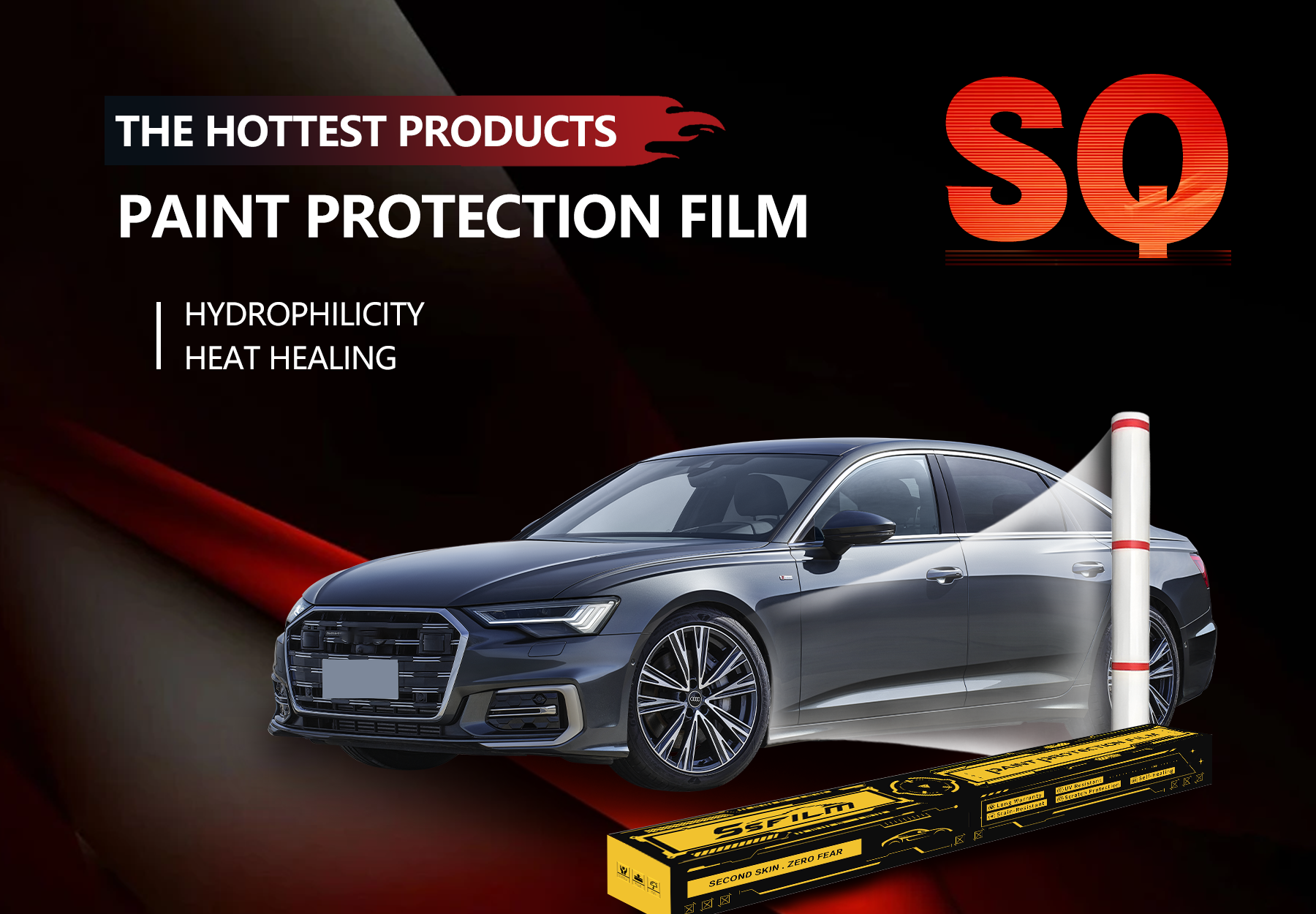
SQ Series Heat-healing Hydrophilicity Car Paint Protection Film


