


Sunroof Protection Film Buying Guide for Distributors and Installers
Key Takeaways
Evaluate films on four pillars: performance, fit, compliance, and cost.
Match film type to climate and customer needs for best results.
Test sample rolls on common sunroof types before buying in bulk.
Check warranty terms and certifications to avoid future problems.
Calculate total installed cost, including waste and labor, not just price per roll.
Technical Performance Essentials
Heat Rejection and UV Blocking
Sunroof glass absorbs solar energy quickly and transfers that heat into the cabin. Infrared (IR) blocking reduces this heat load at the source. Infrared radiation carries roughly half of the sun's energy, so a high IR figure describes only part of the total heat load. Total solar energy rejection (TSER) captures the full spectrum; where a data sheet lists TSER, treat it as the more complete number. A film with strong IR rejection keeps cabin temperatures lower and reduces air conditioning demand. Installers should look for published heat rejection figures rather than marketing claims alone. Test conditions matter, so compare films measured under the same standard.
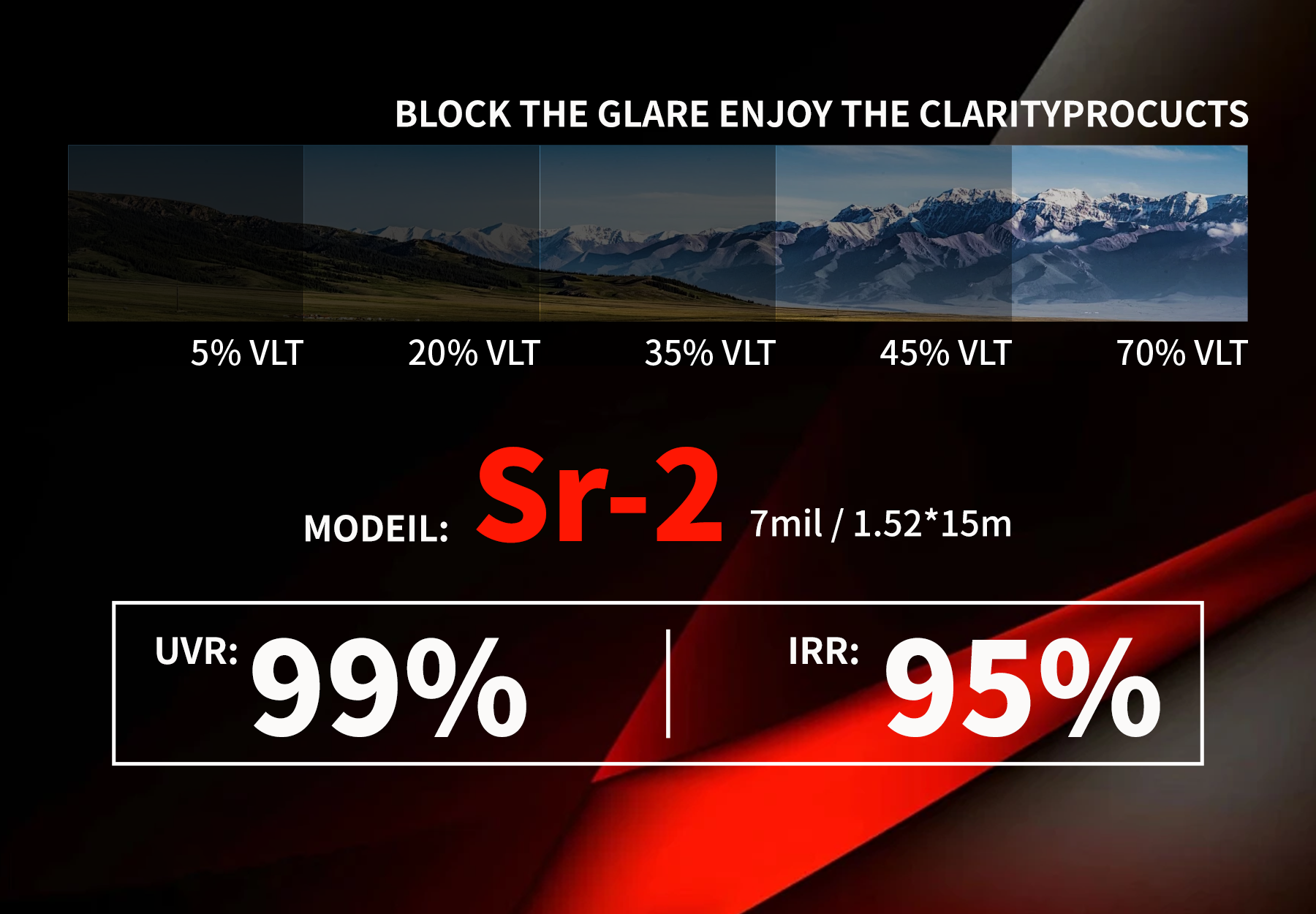
UV protection deserves equal attention. Recommend films that block 99% or more of UV rays. This protects passengers' skin and prevents interior fading over time. A quality sunroof protection film should state both UV and IR performance clearly on its data sheet, together with the test method behind each figure.
Clarity, Distortion, and Durability
Optical clarity separates premium films from budget stock. Panoramic roofs expose every flaw, so high-definition clarity without haze or distortion is essential. Durability indicators matter too. UV-stable resin systems, multi-layer construction, and documented weathering tests signal long-term optical stability. Ask suppliers how their films resist color shift after prolonged sun exposure.
Construction determines how a film performs over years of service. The SsFilm 7.5mil high-definition ice-blue sunroof protection film illustrates this well. Its aliphatic TPU, sourced from Lubrizol and BASF, delivers clarity, anti-yellowing performance, and scratch resistance. Buyers can use such specifications as a benchmark when comparing candidate films. Strong technical numbers, backed by named materials and test methods, give distributors and installers confidence in the product they stock.
Film Types and Best-Fit Uses
Interior Solar Films: Ceramic, Metallized, and Dyed
Each of these categories is an interior automotive window film, applied to the cabin side of the glass, and each serves a distinct role in a sunroof portfolio. Ceramic films excel at heat rejection and remain signal-friendly, which suits modern vehicles packed with electronics. Metallized films deliver cost-effective solar control and perform well in straightforward applications. Dyed films meet budget and decorative needs, giving customers an accessible entry point.
Film Type | Best Fit |
|---|---|
Ceramic | High heat rejection, signal-friendly performance |
Metallized | Cost-effective solar control |
Dyed | Budget and decorative applications |
Smart distributors stock all three categories. Customers arrive with different budgets and expectations. A shop that offers only one type will turn business away.
The exterior route is a separate product category, not a fourth entry in the table above. Film built on TPU is applied to the outside of the glass and works on different physics: it reflects and absorbs energy before that energy reaches the glass, and it adds a physical layer against stone chips, tree sap, and brush marks from automatic car washes. Interior solar film and exterior TPU film solve different problems, and most trade buyers end up carrying both rather than choosing between them.
Matching Film to Climate and Customer
Climate shapes film selection. Hot, humid markets reward films with strong infrared blocking, since cabin heat builds quickly under intense sun. Mild climates allow more flexibility, and buyers can prioritize clarity or price. Installers should match the film's heat rejection rating to local summer conditions.
Customer segment matters equally. Luxury vehicles with large panoramic roofs justify premium films that preserve optical clarity. Economy vehicles often suit metallized or dyed options that control cost. Distributors typically carry solar control, security and impact-resistant, decorative and frosted, and anti-glare categories. Sunroof film should fit within this broader portfolio rather than stand alone. A well-planned lineup lets installers upsell without overstocking any single category.
Application Fit and Sunroof Compatibility
Thickness, Adhesive, and Shrinkage
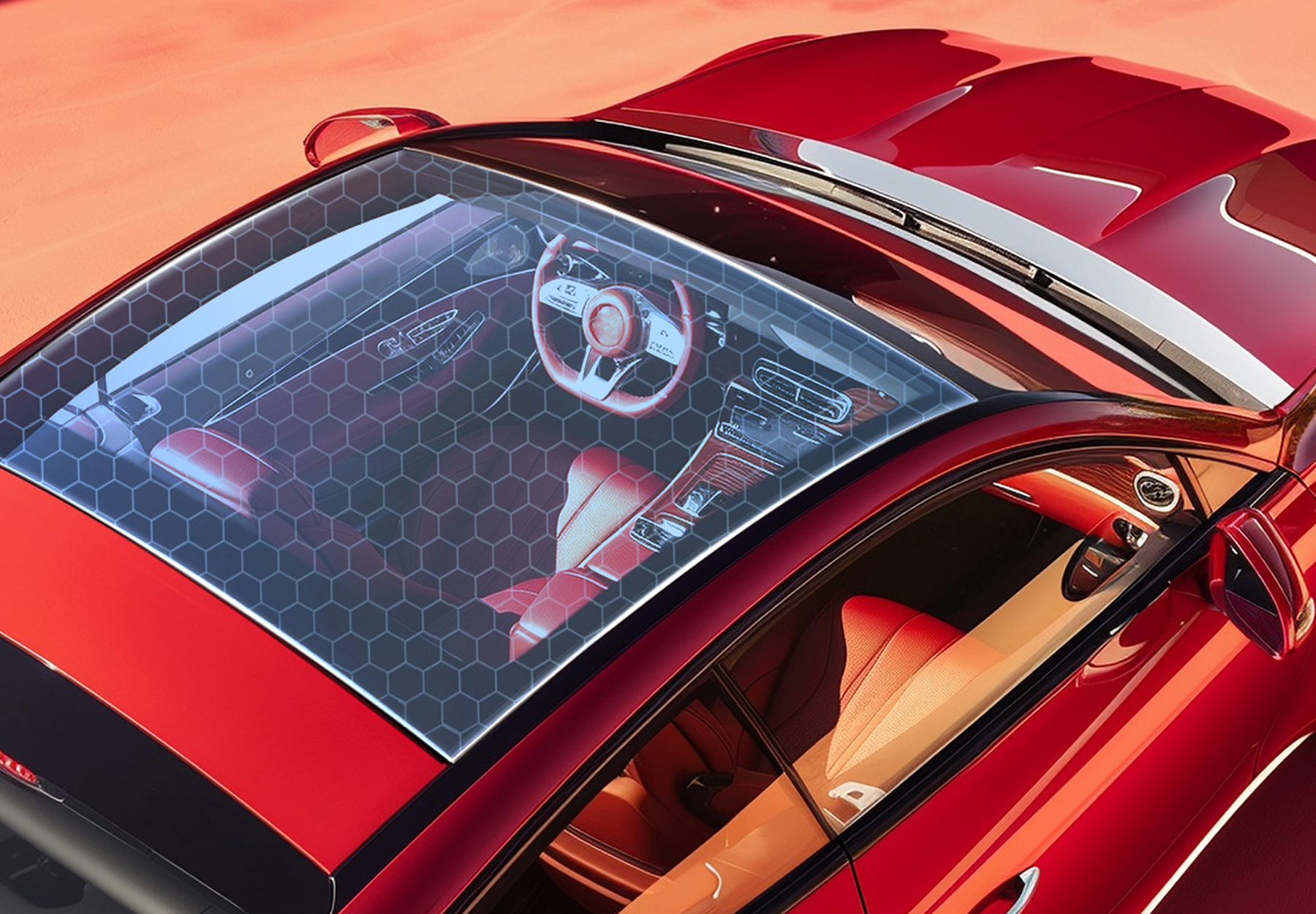
Film thickness sets the protection level and the installation difficulty. A 7.5mil film delivers robust impact and scratch protection, which suits high-value vehicles and demanding customers. Thinner films conform more easily around curves and tight edges, so they simplify work for less experienced installers. Distributors should stock both ends of the range and let the job decide.
Adhesive type matters just as much. A fragment-retention adhesive laminate holds glass fragments in place during impact — the property the trade usually calls shatter retention — and that reduces injury risk and adds a genuine safety selling point. Installers should confirm the adhesive specification before quoting security benefits to a customer.
Shrinkage control separates predictable films from frustrating ones. A smooth, stable film shrinks evenly under heat and avoids surprise distortion during fitting. Bulk rolls suit high-volume shops that cut consistently and plan yield carefully. Hand-cut methods fit smaller shops with varied vehicle mixes. Either workflow rewards a film with consistent behavior roll after roll.
Glass, Panoramic, and Polycarbonate Roofs
Compatibility information should be clear before any roll is ordered. Panoramic roofs, standard glass sunroofs, and polycarbonate panels each behave differently under heat and adhesion. Suppliers should state which roof types a given sunroof protection film supports. Vague answers invite callbacks and warranty disputes.
Never apply a very dark film to glass that is already heavily tinted. The combined shade can push visible light transmission below legal limits and create a safety hazard at night.
Test any candidate on a scrap panel first, then judge shrinkage, tack, and edge behavior before committing to volume. A roof panel is a small, curved, often coated surface, and it punishes films that behave well only on flat glass.
Compliance, Certifications, and Warranties
Safety Standards and Tint Laws
Safety performance deserves a place on every evaluation sheet. Impact-rated films rely on a fragment-retention adhesive laminate. This laminate holds glass fragments together when the roof takes a strike from debris or a collision. Distributors should ask suppliers for documented impact and security performance rather than accepting a verbal claim. A film marketed for security use should carry test evidence that supports the promise.
Tint regulations vary by market, and sunroof glass does not always receive an exemption. Some jurisdictions treat the sunroof as a separate window with its own visible light transmission limit. Others apply the windshield rule to any glass above the driver. Confirm local rules before promoting a dark shade.
A film that meets the legal limit in one country may fail in another. Verify the rule for each market you serve.
What to Verify in Warranties
A warranty is only as strong as its written terms. Buyers should confirm anti-yellowing coverage in writing, including the time period and the remedy. Adhesion and bubbling coverage should be explicit, with clear exclusions for poor installation. Consistency claims deserve scrutiny as well. Suppliers who cite precision coating lines, such as USA Davis EDI machines, give buyers a verifiable production standard to check.
Supplier credibility rounds out the picture. SsFilm's OEM film manufacturing relationships with more than 50 brands across 100+ countries offer one example of the record a buyer can examine. Request certification documents, warranty samples, and references before signing a volume agreement. A supplier who answers these requests promptly usually stands behind the product.
Cost-Effectiveness for Distributors and Installers
Price per Roll, Waste, and Yield
Price per roll alone misleads. Total installed cost tells the real story. Buyers should factor in waste, yield per roll, and roll planning for common sunroof sizes. A cheaper roll that leaves large offcuts on a small sunroof may cost more per finished job than a pricier roll with tighter planning. Map your most frequent sunroof dimensions against roll width before ordering. This step exposes hidden waste quickly.
Yield deserves the same scrutiny. Track how many sunroofs each roll actually covers in your shop. Compare that figure across candidate films. A film with consistent thickness and predictable shrinkage cuts cleaner and wastes less. Consistency also supports accurate quotes. Wholesale buying adds another layer. Confirm material quality stays uniform batch to batch. Clear compatibility information should accompany every volume order. Commit to volume only after these checks pass.
Installation Time and Margin
Labor drives margin on every sunroof job. A predictable, installer-friendly film shortens fitting time and reduces rework. Fewer callbacks mean fewer unpaid return visits. Both outcomes protect the margin built into each quote. Films that bubble, peel, or fight the installer erode profit quietly. The loss rarely appears on an invoice, yet it compounds across a season.
Test installation speed during sample runs. Time a full sunroof fit with each candidate film. Note how the film handles heat shrinkage and edge work. The Sr-2 7.5mil high-definition ice-blue film offers a useful benchmark here. Its easy installation and long-lasting adhesion without bubbling or peeling show what smooth workability looks like. Compare every candidate against that standard. Faster, cleaner installs let your team book more jobs per week. That capacity gain often outweighs a small difference in roll price.
Choosing the Right Sunroof Protection Film
Evaluation Checklist for Trade Buyers
A structured checklist turns a crowded market into a manageable shortlist. Every candidate film should be scored against the same criteria, so comparisons stay fair. The table below covers the essentials a distributor or installer needs before ordering stock.
Criterion | What to Confirm |
|---|---|
VLT | Published visible light transmission figure for each shade |
UV protection | 99% or higher, stated on the data sheet |
Heat rejection | Infrared blocking measured under a named test standard |
Clarity | High-definition optics with no haze or distortion |
Thickness | 7.5mil for impact protection, thinner stock for easy conforming |
Adhesive type | Fragment-retention laminate where security benefits are sold |
Compatibility | Clear guidance for glass, panoramic, and polycarbonate roofs |
Certifications | Impact and safety test evidence on request |
Warranty | Written anti-yellowing, adhesion, and bubbling coverage |
Price per roll | Quoted alongside yield, not in isolation |
Waste and yield | Sunroofs covered per roll on your common sizes |
Installation time | Minutes per full fit, measured during a sample run |
Print this list and attach a score to each line. A film that wins on price but loses on clarity or warranty coverage rarely survives a season of customer complaints.
Scoring Films Against Your Priorities
Weights matter more than raw scores. A shop in a hot, humid climate should weight heat rejection heavily. A dealer serving luxury panoramic roofs should weight clarity and anti-yellowing performance at the top. High-volume installers should weight installation time and yield, since labor and waste drive margin. Assign each criterion a weight that reflects your market, then multiply the weight by the score. The resulting total ranks candidates against your business rather than against a generic ideal.
Sample installations complete the process. Order a test roll of each finalist and fit it to the sunroof types you see most often. Time the job, inspect the edges after a heat cycle, and check for bubbling or peeling over several weeks. A film that performs well on paper can still fight the installer in practice.
The Sr-2 shows how a candidate moves through this checklist. Its aliphatic TPU construction, sourced from Lubrizol and BASF, supports the clarity and anti-yellowing criteria. The 7.5mil thickness covers the impact and scratch line. Published UV blocking of 99% satisfies the protection requirement. Easy installation and long-lasting adhesion without bubbling or peeling address the workability score. Buyers can run the same test on any sunroof protection film and let the weighted totals decide. The Sr-2 is one worked example, not the only valid answer. A disciplined scoring process, backed by real sample fits, gives distributors and installers a defensible basis for every stocking decision.
Performance, workability, compliance, and cost form one connected decision. A film that wins on heat rejection but fights the installer erodes margin. A bargain roll with weak warranty coverage invites callbacks. Weigh all four pillars together before committing to any sunroof protection film line.
The practical next step is straightforward. Request sample rolls, run test installations on the sunroof types your market sees most, and score each candidate against the evaluation checklist. Build a sunroof film offering on that evidence, and installers will return for stock that performs predictably. End customers will return for results they can see.
FAQ
Which film type suits most sunroof jobs?
Start with the application, not the label. Interior solar films — ceramic, metallized, and dyed — handle heat, glare, and privacy. Exterior TPU film handles impact, surface damage, and optical clarity on the outside of the glass. Within the interior range, ceramic serves heat-heavy climates and signal-sensitive vehicles, metallized covers cost-effective solar control, and dyed films meet budget and decorative requests. Stock a mix across both routes and match each film to the roof, climate, and customer segment in front of you.
Is 7.5mil too thick for a sunroof installation?
Thickness trades protection against conforming ease. A 7.5mil film delivers robust impact and scratch protection for high-value vehicles. Thinner stock conforms more easily around curves. Stock both ends of the range and let the specific roof and installer skill decide.
What UV blocking figure should buyers require?
Require 99% or higher UV blocking, stated on the product data sheet together with the test method behind it. This level protects passengers' skin and limits interior fading. Where a supplier quotes an SPF-equivalent rating, ask how it was derived before repeating it in your own marketing.
What should a warranty cover?
Confirm written anti-yellowing coverage, including the time period and remedy. Adhesion and bubbling coverage should be explicit, with clear exclusions for poor installation. Ask for certification documents and warranty samples before signing a volume agreement. A supplier who answers promptly usually stands behind the product.
Should buyers test before committing to volume?
Yes. Order sample rolls and fit them to the sunroof types your market sees most. Time each job, inspect edges after a heat cycle, and watch for bubbling or peeling over several weeks. Score results against your weighted checklist. Evidence from real fits beats any spec sheet.


